Red light therapy can follow microneedling, and at Skin Anthology it is added in the same visit, right after the needling, to support recovery. The American Academy of Dermatology says dermatologists often add red light to a treatment plan that includes microneedling. This guide covers why the two are paired, how the visit runs, what red light can and cannot do, safety, aftercare and cost.
Why red light is paired with microneedling
Microneedling uses fine, medical grade needles to create uniform microchannels in the skin. Those controlled micro injuries trigger the skin’s repair response, including new collagen, and there is no heat involved.
Red light therapy works differently. At Skin Anthology it is LightStim red and near infrared light, delivered by hands free LED panels. It is non thermal, it does not break the skin’s surface, and the clinic often uses it after aesthetic treatments to support recovery.
The American Academy of Dermatology describes red light as a complementary therapy: part of a plan built around a standard treatment. Its example for signs of aging is a plan that includes a medicated cream, microneedling or a chemical peel, with red light added.
How might it help? The Cleveland Clinic explains that red light is thought to act on the mitochondria, the energy centers of cells. It lists four ways it may work in skin: stimulating collagen production, increasing fibroblasts (the cells that make collagen), increasing blood circulation and reducing inflammation.

Clinic red light is stronger than home devices.
The American Academy of Dermatology says the red light dermatologists offer is more powerful than the light in devices sold for home use.
How red light fits into a microneedling visit
At Skin Anthology the two treatments happen in one appointment, in this order:
- Review. Your provider goes over your skin, goals, medications and supplements, including blood thinners and anything that makes you sensitive to light.
- Numbing. Your provider applies a topical numbing cream before treatment for comfort.
- Microneedling. The device is guided across the skin, with depth adjusted as it goes. Optional add ons such as growth factor serum may be used.
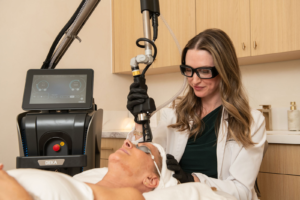
- Red light. LED panels are positioned over the treated skin. Most patients feel gentle warmth or a deeply relaxing sensation.
A microneedling appointment typically takes 60 to 90 minutes, depending on the area and any added enhancements. A red light session usually lasts about 20 minutes, depending on the area and whether it is added to another service.
The fall Collagen Reset special packages this exact visit: full face microneedling with growth factor and red light, in one appointment. Other options, such as PRF and PDRN, are covered on the microneedling enhancements page.
What about red light at home afterwards? The AAD says that to help maintain results after in office treatment, a dermatologist may recommend a home red light device. No source sets a universal start date for using one on freshly needled skin, so ask your provider when it is right for your skin.
What red light can and cannot do
Right after a session, many patients notice calmer skin or less redness, and skin quality improvements develop with repeated sessions.
The research is encouraging but young. The AAD describes a large study in which patients who had in office red light therapy after a laser treatment had less discoloration and swelling from the laser. That study looked at laser, not microneedling, and the AAD says more research is needed on how long and how much red light to use.
The Cleveland Clinic calls red light an emerging treatment: some studies show promise, many were small, and more high quality trials are needed. Keep expectations realistic. Red light supports recovery; the microneedling series does the main work, and most patients benefit from 3 to 6 microneedling treatments spaced about four weeks apart.
“FDA cleared” is about safety, not results.
The American Academy of Dermatology explains that an FDA cleared red light device is considered low risk, but clearance says nothing about how well it works. Terms like “FDA approved” or “FDA certified” have no meaning for a medical device, because the FDA clears devices rather than approving them.
Safety: who should check first
The AAD says red light appears safe in the short term, with mild side effects such as temporary pain or irritated skin. Still, tell your provider before treatment if any of these apply:
- Light sensitivity. The AAD says a medicine that makes skin more sensitive to light may mean red light is not recommended, and a light sensitive condition such as lupus can worsen with red light.
- A darker skin tone. The AAD notes that darker skin tones are more sensitive to visible light, including red light, which can lead to dark spots. It advises talking with a dermatologist before using a home device.
- Pregnancy or breastfeeding. Skin Anthology does not recommend microneedling during pregnancy or while breastfeeding.
- Skin concerns. Mention active acne, infections, slow healing, unusual scarring or any recent skin treatments.
Never stop a prescribed medicine unless the clinician who prescribed it advises it.
Eye protection matters with any red light device. The AAD says to wear the goggles the directions call for, every time, and not to substitute sunglasses. The guide to red light therapy safety covers side effects and home devices in more detail.

Red light is not ultraviolet light.
The American Academy of Dermatology notes that, unlike the UV light that can cause skin cancer, research has not found that red light causes any type of cancer. It still recommends eye protection and following the directions for any device.
Aftercare once you leave
Red light adds no downtime of its own, so your aftercare is the microneedling aftercare:
- Expect some redness. Redness, warmth and mild swelling can feel like a light sunburn. They are most noticeable in the first 24 hours and improve over 1 to 3 days. Mild dryness or flaking may follow.
- Keep it gentle. Use gentle cleansers and moisturizers only, and skip makeup for at least 24 hours.
- Stay cool and covered. Avoid heat, intense workouts, alcohol and direct sun for at least 48 hours.
- Hold the actives. Avoid exfoliants, retinoids and other active skin care for 5 to 7 days.
For a day by day plan, see the microneedling aftercare guide. If you are worried about marks or scarring, the guide to whether microneedling causes scarring explains what raises the risk and when to call.
What it costs
These figures are on the current price list:
| Item | Price |
|---|---|
| Full face microneedling | $399 |
| Growth factor add on | $99 |
| Red light add on | $99 |
| Collagen Reset | $449 |
The Collagen Reset is a fall special: full face microneedling with the growth factor and red light add ons, regularly $597 booked separately. It applies to new bookings while the fall season lasts.
Packages of 3 microneedling sessions are 15% off, for example $1,017.45 for the full face. Red light is frequently booked as an add on, and standalone sessions are also available, with pricing reviewed at your consultation.
Frequently asked questions
Can you do red light therapy right after microneedling?
Does red light help with redness after microneedling?
Does adding red light mean more downtime?
Can I use my home red light mask after microneedling?
How much does red light cost with microneedling?
Thinking about microneedling with red light?
The consultation is free. Your provider looks at your skin, talks through your goals and any add ons, and you leave with a plan and the price before you commit. Skin Anthology Med Spa, 848 N La Cienega Blvd, Los Angeles.
Prefer to talk? (310) 482-2081
Sources: American Academy of Dermatology, Is red light therapy right for your skin?; Cleveland Clinic, Red light therapy; Skin Anthology microneedling, red light therapy and microneedling enhancements pages and price list. This article is general information, not medical advice.