CO2 laser aftercare comes down to three habits: keep the treated skin clean and coated in the healing ointment your provider gives you, keep it out of the sun, and let it peel on its own. Cleveland Clinic explains that this wound care is meant to stop scabs forming, because scabs raise the chance of scarring. This guide turns that into a simple routine for each stage of healing.
Before you leave the clinic
Aftercare starts on the treatment chair. The Mayo Clinic says the care team applies a thick ointment to the treated skin after ablative resurfacing and may cover it with a dressing. Cleveland Clinic describes a non stick dressing left in place for the first 24 hours.
Before you go home, make sure you know:
- Which cleanser and ointment to use, and how often to apply them.
- Whether you have a prescription to take. The Mayo Clinic notes you may be given an antiviral medicine before and after treatment to prevent a viral infection, and Cleveland Clinic says it is continued for 7 to 10 days afterwards.
- When your follow up visit is. Skin Anthology recommends post treatment visits to check healing and guide your skin care from there.
The Skin Anthology CO2 laser consultation asks about cold sores, delayed healing and recent isotretinoin use for this reason.
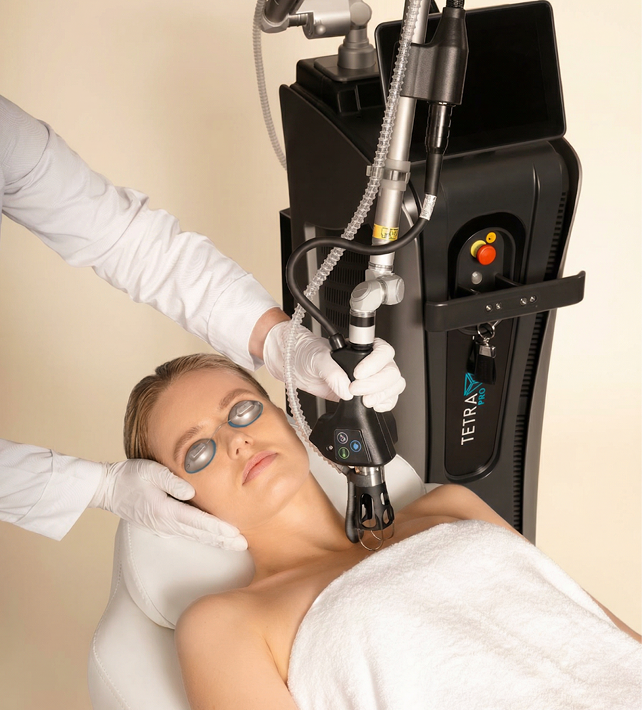
Your daily routine in the first week
The first week is when the new skin forms. Follow your provider’s instructions first; this is what the guidance generally looks like.
- Clean gently, several times a day. Cleveland Clinic describes cleaning the treated area two to five times a day with saline or a dilute vinegar solution.
- Coat it again straight away. After each clean, apply the healing ointment. Cleveland Clinic lists plain ointments such as petroleum jelly for this step.
- Keep friction off the skin. Skin Anthology asks patients to avoid anything that rubs the treated area during early healing. Pat, never scrub, and use a clean soft cloth.
- Calm the swelling. The Mayo Clinic says a pain reliever and ice packs can help, and Cleveland Clinic suggests ice packs in the first 24 to 48 hours and an extra pillow at night.
- Let it peel on its own. Peeling, flaking and light crusting on days 4 to 7 are part of normal healing. Pulling at loose skin exposes the new layer underneath before it is ready.
| Stage | When | Focus |
|---|---|---|
| Red and swollen | Days 1 to 3 | Clean, coat, ice |
| Peeling | Days 4 to 7 | Let it shed |
| Pink, healing | Weeks 2 to 4 | Makeup once cleared |
| Remodeling | Months 1 to 6 | Daily SPF |
Stages from the Skin Anthology CO2 laser page. For what each day looks and feels like, see the CO2 laser downtime guide.
The ointment is there to stop scabs.
Cleveland Clinic explains that cleaning and coating the treated skin is meant to prevent scabs, which can increase the chance of scarring and make healing take longer. Keeping the skin moist is the whole point of the routine.
What to avoid while you heal
During early healing, Skin Anthology asks patients to avoid:
- Heat exposure, such as a sauna or a hot tub.
- Strenuous exercise until your provider says it is fine to return.
- Alcohol, which adds to swelling.
- Active skin care: retinoids, exfoliating acids and other actives stay paused until you are cleared.
The Mayo Clinic adds two more: avoid products that could irritate your face, such as cosmetics, and avoid places that raise your risk of infection, such as public whirlpools. It also advises not smoking for at least two weeks before and after treatment, because smoking slows healing.
Thick creams can cause tiny white bumps.
The Mayo Clinic notes that thick creams and bandages on the face after resurfacing can worsen acne or cause small white bumps called milia for a short time. If they appear, show your provider rather than squeezing them.
Makeup and skin care once the surface heals
Once the new skin has closed over, the routine shifts from wound care to protection. On the Skin Anthology timeline, makeup can come back in weeks two to four, once your provider has cleared it.
Cleveland Clinic suggests oil free makeup to cover the pink to red color that follows resurfacing, and notes that green based makeup is particularly good at neutralizing redness.
Stronger products come back last. Cleveland Clinic says Retin A and glycolic acid products can usually be resumed about six weeks after the procedure, or as your provider directs.
Gentle products first, actives later: the microneedling aftercare guide follows the same pattern for a lighter treatment.
Redness can outlast the peeling by months.
Cleveland Clinic says the pink color after CO2 resurfacing generally fades in two to three months but can take as long as six, and that it tends to last longer in blondes and redheads.
Sun protection is a months long job
Skin Anthology asks for strict sun avoidance and daily broad spectrum SPF for several months after a CO2 treatment.
- Use a broad spectrum facial sunscreen. Cleveland Clinic recommends one that screens both UVA and UVB rays, made for the face, with an SPF of at least 30.
- Pair it with moisturizer every day. The Mayo Clinic recommends a daily moisturizer and a sunscreen of at least SPF 30, and notes that new sun damage can reverse your results.
- Consider a tinted formula for brown or Black skin. The Mayo Clinic says tinted sunscreens with iron oxide and titanium dioxide help protect against melasma and post inflammatory hyperpigmentation.
Cleveland Clinic notes that people with darker skin tones have a greater risk of healing with darker patches, although anyone can be affected. The guide to post inflammatory hyperpigmentation treatment explains how those patches are handled if they appear.
When to call the clinic
Redness, itching and peeling are expected; a change in direction is not. Call Skin Anthology at (310) 482-2081 if you notice:
- Pain, redness or swelling that gets worse instead of better. The Mayo Clinic lists bacterial, viral and fungal infection among the risks of resurfacing.
- Blisters or painful sores, especially around the mouth. The Mayo Clinic says the most common infection after resurfacing is a flare of the herpes virus that causes cold sores.
- Patches turning darker or lighter in the weeks after healing. Cleveland Clinic lists both among the possible effects.
What CO2 laser resurfacing costs
On the current Skin Anthology price list, fractional CO2 is $999 for the full face, $1,399 for the full face and neck, $1,399 for the neck and décolleté, and $1,699 for the full face, neck and décolleté. The consultation is free.
If a full week of aftercare does not fit your calendar, ask about CoolPeel, the lighter CO2 option with shorter downtime. Your provider matches the depth to your skin and the recovery time you can give it at a free consultation.
Frequently asked questions
How often should I clean my face after CO2 laser?
When can I wear makeup after CO2 laser resurfacing?
When can I go back to retinol and exfoliating acids?
Can I work out after CO2 laser?
How long do I need sunscreen after CO2 laser?
Plan your CO2 treatment and your recovery together.
The consultation is free. Your provider assesses your skin, reviews your health history, explains the aftercare and gives you the price before any treatment. Skin Anthology Med Spa, 848 N La Cienega Blvd, Los Angeles.
Prefer to talk? (310) 482-2081
Sources: Cleveland Clinic, Carbon Dioxide Laser Resurfacing; Mayo Clinic, Laser resurfacing; Skin Anthology CO2 laser page and price list. This article is general information, not medical advice. Always follow the written aftercare your own provider gives you.