
The usual side effects of laser hair removal are mild and short lived: redness, swelling and discomfort that look like a mild sunburn and, according to the American Academy of Dermatology, usually last 1 to 3 days. Less common effects include blistering, cold sore outbreaks, infection, scarring and lighter or darker skin. This guide covers what is normal, what raises your risk, how to lower it, and when to call your provider.
The common side effects, and how long they last
Laser hair removal turns light into heat inside the hair follicle. The skin around it feels some of that heat, so a short reaction afterward is expected.
- Redness and swelling. The American Academy of Dermatology says this often looks like a mild sunburn, and that a cool compress helps with discomfort.
- Warmth or tingling. Most patients at Skin Anthology describe mild warmth or tingling paired with a cooling sensation, because the skin is kept cool while the laser works.
- Short duration. The Skin Anthology laser hair removal page says mild redness or warmth typically resolves within hours, and the AAD puts the outer limit at 1 to 3 days.
There is no real downtime: the AAD notes that most people go straight back to their everyday activities.
Your hair will not fall out on the spot.
Mayo Clinic says treated hair usually sheds over several days to weeks after a session. Seeing hair in the treated area for a week or two is normal, not a sign the laser missed.
Less common side effects to know about
A smaller group of effects shows up less often. Between them, the AAD and Mayo Clinic list:
- Skin darkening or lightening. Usually temporary, though in rare cases it can last.
- Blistering and crusting.
- Cold sore outbreaks and infection.
- Scarring and changes in skin texture.
- Thicker hair around the treated area, which is rare.
| Effect | Frequency | Course |
|---|---|---|
| Irritation | Common | A few hours |
| Color change | Common | Usually fades |
| Blistering | Uncommon | Call provider |
| Scarring | Uncommon | Call provider |
| Thicker hair | Rare | Ask provider |
Frequency as described by Mayo Clinic.
The AAD is direct: laser hair removal can be dangerous in inexperienced hands, and burns, permanent changes to skin color and scars can occur. It also says that following both the before and after instructions greatly reduces the risk of side effects.
Why skin tone and hair color change the risk
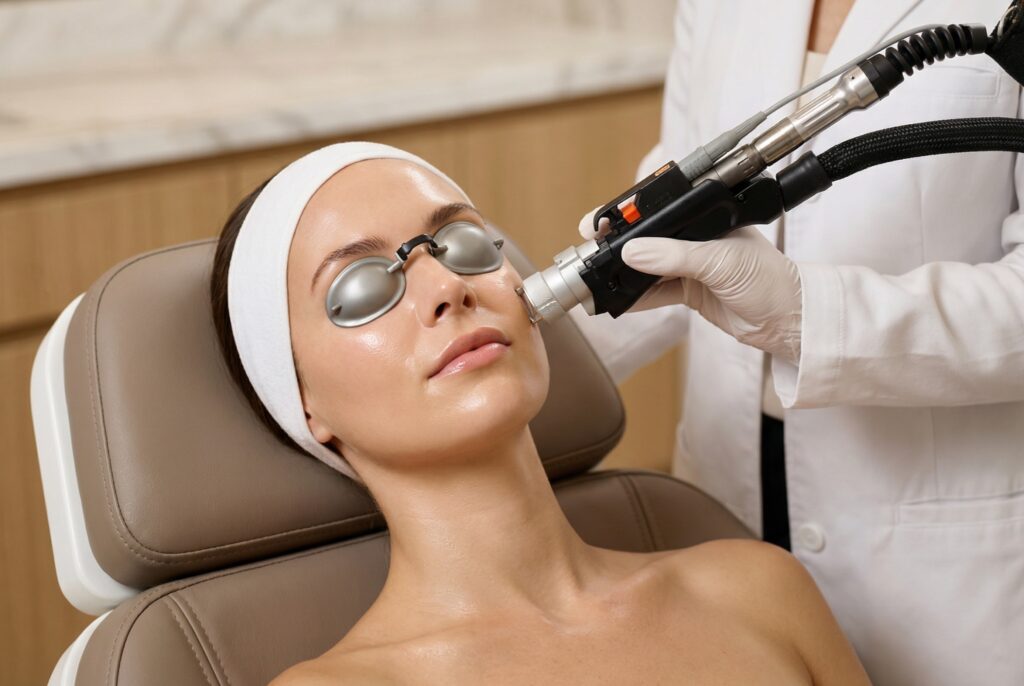
The laser is aimed at melanin, the pigment in the hair. Skin has melanin too, and Mayo Clinic explains that black and brown skin contains more of it. That is why the type of laser and its settings matter so much: the right choice reduces the risk of burns and lasting changes in skin color.
The AAD says that in the past only people with dark hair and light skin could safely be treated, and that today laser hair removal is an option for dark skin too, performed very carefully. Mayo Clinic adds that experience with a range of skin colors improves both safety and results.
At Skin Anthology, settings are matched to your skin tone and hair type at the consultation and adjusted throughout the session based on how your skin responds.
Hair color affects results more than safety. Mayo Clinic says blonde, white, gray and red hair respond less well, because they carry less of the pigment the laser absorbs.
The eyebrows and eyelids are off limits.
Mayo Clinic says laser hair removal is not recommended for the eyelids, eyebrows or the area around them because of the risk of serious eye injury. It also should not be used on tattooed skin. Everywhere else on the face and body, protective eyewear keeps the eyes safe during treatment.
How to lower your risk, before and after
Before treatment, the Skin Anthology laser hair removal page asks you to:
- Shave within 24 hours of your appointment, and do not wax, pluck or thread.
- Skip tanning, spray tans and long sun exposure for at least 2 weeks before.
- Share your history: current medications, hormonal therapies, skin sensitivities and any recent skin treatments. Do not stop a prescribed medication unless the clinician who prescribed it advises you to. If you get cold sores, mention that too.
Numbing, if you need it, is applied by your provider in the clinic; Mayo Clinic notes a provider may apply a numbing cream. Ask at your visit rather than putting a numbing product on yourself at home.

After treatment, the routine is short:
- Avoid hot baths, saunas, intense exercise and direct sun for 24 to 48 hours.
- Use broad spectrum sunscreen every day and keep the skin moisturized. Mayo Clinic recommends SPF 30 or higher and protecting treated skin from the sun for six weeks or as your provider directs.
- Between sessions, shaving is fine. Keep avoiding waxing, plucking and threading.
Sun is the risk factor you control.
Mayo Clinic says the risk of the skin turning darker or lighter is higher in people who do not avoid sun exposure before or after treatment. Daily sunscreen and covering the treated area are the simplest ways to keep a common, temporary reaction from becoming a lasting one.
When to call your provider
Redness that eases within a few days needs only a cool compress. Call the clinic if you notice:
- Blisters or crusting on the treated skin
- Signs of infection, or a cold sore outbreak
- Redness or swelling that is getting worse, or lasts past the 1 to 3 days the AAD describes
- Skin that turns darker or lighter and does not fade
Mayo Clinic notes that when a stronger skin reaction happens right after treatment, the provider may apply a steroid cream.
Results, sessions and current prices
Laser hair removal greatly reduces hair growth, and some hair may be removed permanently, but Mayo Clinic notes that hair can grow back over time, usually finer and lighter. According to the Skin Anthology laser hair removal page, most patients need about 6 to 8 sessions, timed to each area: about every 4 to 6 weeks for the face and 6 to 8 weeks for the body.
On the current price list, sessions are priced by area, with a package of 8 at 15% off:
| Area | Session | Package |
|---|---|---|
| Small | $99 | $673.20 |
| Medium | $149 | $1,013.20 |
| Large | $199 | $1,353.20 |
| Full body | $699 | $4,753.20 |
From the current Skin Anthology price list. Package prices are the eight session total. Area sizing is confirmed at your consultation.
For a full breakdown of what a course costs, see the laser hair removal cost guide. For how long results hold, read how long laser hair removal lasts. If you are also dealing with sun spots or brown patches, the laser for dark spots guide covers that separate treatment.
Frequently asked questions
How long do laser hair removal side effects last?
Is laser hair removal safe for darker skin?
Can laser hair removal darken or lighten my skin?
When can I go in the sun after laser hair removal?
Is laser hair removal permanent?
Questions about your skin and the laser?
The consultation is free. Your provider looks at your skin tone and hair, sets the laser for you, walks through what to expect afterward, and gives you the price before you commit. Skin Anthology Med Spa, 848 N La Cienega Blvd, West Hollywood.
Prefer to talk? (310) 482-2081
Sources: American Academy of Dermatology, Laser hair removal: FAQs; Mayo Clinic, Laser hair removal; Skin Anthology laser hair removal page and price list. This article is general information, not medical advice; your provider’s instructions come first.