
TL;DR:
- Laser hair removal uses focused light to damage hair follicles and reduce growth over time, but it is classified as long-term reduction, not permanent removal. Success depends on proper device selection for skin type, session frequency, and operator skill, with most patients needing about 6 to 8 sessions, every 4 to 6 weeks for the face and 6 to 8 weeks for the body. Maintenance sessions may be required due to hormonal factors or hair color limitations, and careful preparation reduces risks of side effects.
Laser treatment for hair removal is a medically regulated procedure that uses concentrated light energy to damage hair follicles and reduce unwanted hair growth over time. The US FDA classifies it as long-term hair reduction, not permanent removal. That distinction matters: most people need about 6 to 8 sessions to see full results, and occasional maintenance keeps those results intact. Effectiveness depends on the laser wavelength used, your skin phototype on the Fitzpatrick scale, and the skill of the practitioner performing the treatment.
How does laser treatment for hair removal work?
The science behind hair removal by laser treatment is called selective photothermolysis. The laser emits a specific wavelength of light that targets melanin, the pigment inside each hair follicle. The follicle absorbs that light, converts it to heat, and the heat disables the follicle’s ability to produce new hair. Surrounding skin tissue stays largely unaffected when the correct wavelength and pulse duration are used.
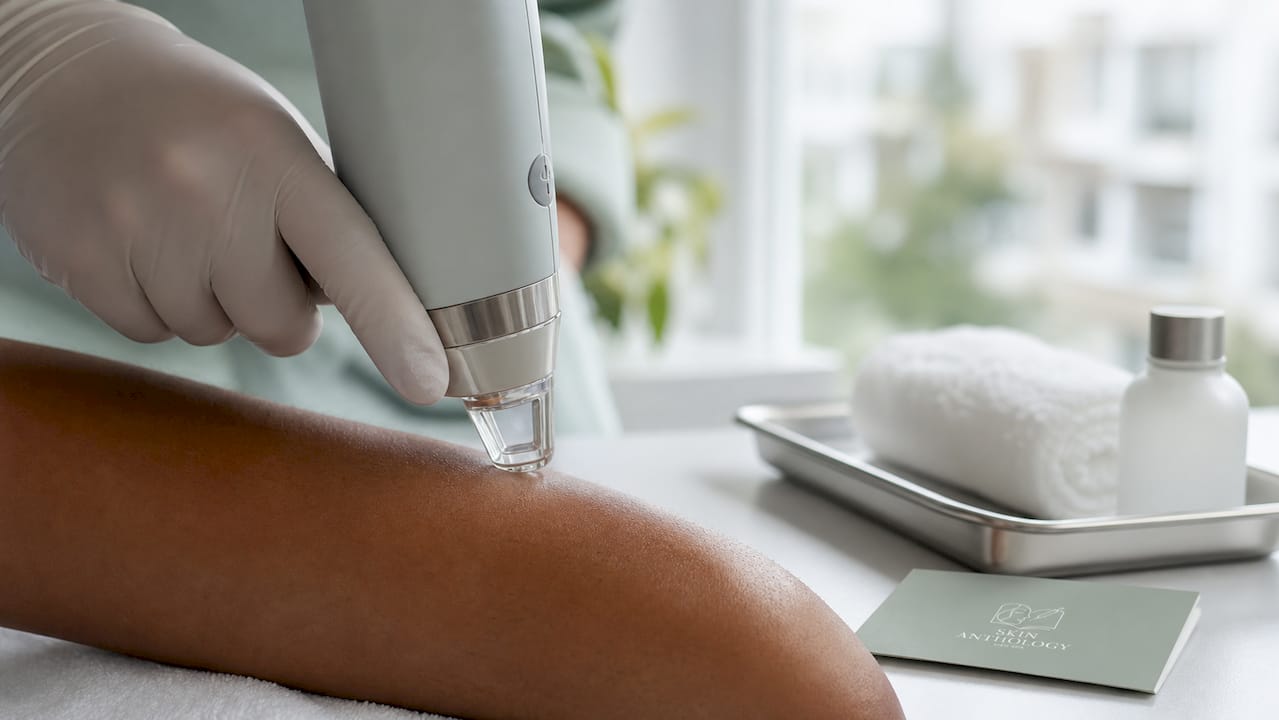
The catch is timing. Only 10–20% of hairs are in the anagen (active growth) phase at any given moment, and the laser only disables follicles in that phase. Sessions spaced 4 to 6 weeks apart for the face and 6 to 8 weeks for the body capture successive waves of follicles as they cycle into anagen. Skipping sessions or spacing them too far apart reduces the cumulative effect significantly.
Three laser types dominate clinical practice:
- Nd:YAG 1064 nm: Penetrates deep into the dermis and bypasses surface melanin, making it the gold standard for dark skin types (Fitzpatrick IV–VI).
- Alexandrite 755 nm: Fast and effective for lighter skin tones (Fitzpatrick I–III) with high melanin contrast between hair and skin.
- Diode 800–810 nm: A mid-range option that works across a broader range of skin tones with good follicle penetration.
Cooling systems, including contact cooling tips and chilled gels, protect the outer skin layer during each pulse. Longer pulse durations heat the follicle thoroughly without overheating the epidermis, which is especially critical for patients with darker skin tones.
Pro Tip: Ask your provider which specific laser device they use and why it suits your Fitzpatrick skin type. A clinic that can answer that question clearly is one that prioritizes your safety over convenience.
What to expect during and after your sessions
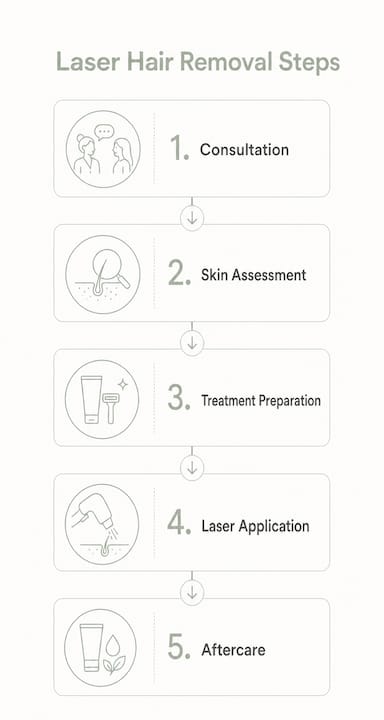
A full treatment course follows a predictable structure. Here is what a typical experience looks like from first session to final result:
- Consultation and test spot: Your provider assesses your skin type, hair color, and medical history, and may treat a small test spot first, especially for darker skin tones or recently sun-exposed skin.
- Session scheduling: Most people complete about 6 to 8 sessions, spaced 4 to 6 weeks apart for the face and 6 to 8 weeks apart for the body.
- During the session: You will feel a mild snapping or warmth with each pulse. Cooling gel or a built-in cooling tip reduces discomfort. Sessions for small areas like the upper lip take under five minutes; full legs can take up to an hour.
- Immediate post-treatment: Mild redness (erythema), slight swelling around follicles (perifollicular edema), and warmth are normal. These typically resolve within a few hours.
- Hair shedding phase: Treated hairs shed naturally around 10–14 days after each session. This is not regrowth. It is the follicle expelling the damaged hair shaft.
- Between sessions: Avoid sun exposure and skip exfoliating acids or retinoids on treated areas until the skin fully settles.
Pro Tip: Do not wax or pluck between sessions. Shaving is fine because it leaves the follicle intact. Waxing removes the follicle’s melanin target, which reduces the laser’s effectiveness at the next session.
What are the potential side effects and how to manage them?
Side effects from hair removal with laser treatment fall into two categories: common and expected, or rare and preventable.
Between 92–96% of properly counseled patients report no significant side effects beyond mild redness. That figure reflects what happens when the right laser is matched to the right skin type by a trained provider. The remaining risk comes almost entirely from operator error, not from the technology itself.
Common side effects
| Side effect | Typical duration | Management |
|---|---|---|
| Erythema (redness) | A few hours | Cool compress, gentle moisturizer |
| Perifollicular edema | 24 hours | Hydrocortisone cream if needed |
| Mild warmth or itching | 24 hours | Aloe vera gel, avoid heat |
Rare but serious side effects
- Post-inflammatory hyperpigmentation (PIH): More common in Fitzpatrick IV–VI skin when the wrong laser or excessive energy is used. Mineral sunscreen applied consistently before and after treatment reduces this risk significantly.
- Paradoxical hypertrichosis: Affects approximately 1–3% of female patients, where treated areas paradoxically grow more hair. Hands-on fluence adjustment by the practitioner during each session lowers this risk.
- Burns or blistering: Almost always the result of operator error, such as using an Alexandrite laser on dark skin or applying excessive energy levels.
Proper preparation cuts risk sharply. Stop retinoids at least 5 days before treatment and avoid sun exposure for at least 14 days before and after each session. Patients with darker skin tones benefit from mineral sunscreens, which sit on the skin surface rather than absorbing deeper into the epidermis where they could interfere with treatment response.
If you experience persistent pigmentation changes or unusual skin reactions after a session, consult a board-certified dermatologist rather than waiting it out.
Who is a good candidate for laser hair removal?
The best results come from people with dark, coarse hair and lighter skin because the contrast between hair melanin and skin melanin makes targeting easier. That said, effective options exist for all skin tones when the correct laser wavelength is chosen. The Nd:YAG 1064 nm laser achieves over 80% hair reduction in darker skin phototypes when properly matched.
Hair color matters more than most people realize. Higher contrast between dark hair and lighter skin allows better targeting. Gray, white, blonde, and red hair contain little to no melanin, which means laser energy has no reliable target. These hair colors respond poorly to current laser technology regardless of skin tone.
Common contraindications include:
- Active tan or recent sun exposure (increases burn risk)
- Pregnancy (insufficient safety data for laser use)
- Active skin infections or open wounds in the treatment area
- Certain photosensitizing medications, including some antibiotics and acne drugs
- Conditions like vitiligo or active eczema in the treatment zone
Hormonal conditions like polycystic ovary syndrome (PCOS) can stimulate new follicles even after a full treatment course. This does not mean laser hair removal fails for people with PCOS. It means maintenance sessions annually or biennially are a realistic part of long-term management. A thorough consultation at a clinic like Skin Anthology will flag these factors before your first session, not after.
For patients dealing with conditions like hidradenitis suppurativa, laser hair removal can also serve a therapeutic role. Learn more on Skin Anthology’s laser hair removal page.
Key Takeaways
Laser hair removal delivers long-term hair reduction when the correct wavelength is matched to your skin phototype and sessions are completed consistently over a course of about 6 to 8 sessions.
| Point | Details |
|---|---|
| FDA classification | Laser hair removal is long-term reduction, not permanent removal. |
| Session requirement | Complete about 6 to 8 sessions, 4 to 6 weeks apart for the face and 6 to 8 weeks for the body, to capture all growth cycles. |
| Laser-to-skin matching | Nd:YAG 1064 nm is the safest and most effective choice for Fitzpatrick IV–VI skin. |
| Side effect prevention | Operator skill and proper preparation prevent the vast majority of adverse events. |
| Maintenance planning | Annual or biennial touch-up sessions maintain results, especially with hormonal influences. |
What I’ve learned from treating every skin tone in Los Angeles
Los Angeles is one of the most skin-diverse cities in the world. At Skin Anthology, we see Fitzpatrick types I through VI in a single day. That range has taught me something that most generic guides miss: the device is only as good as the person operating it.
I have seen patients come in after treatments elsewhere with PIH from an Alexandrite laser used on Fitzpatrick V skin. The technology was not the problem. The protocol was. Matching wavelength to skin type is not optional. It is the foundation of every safe treatment plan we build.
The other thing I tell every patient: your preparation matters as much as what we do in the room. Showing up with a fresh tan, or having used a retinoid the night before, changes the risk profile of your session. We delay treatment when we see it. That is not us being overly cautious. That is us protecting your results and your skin.
Up to 90% hair reduction is achievable with a full course of treatment. But I am honest with patients that touch-ups are part of the picture, especially for those with hormonal factors at play. The goal is not a single dramatic result. The goal is skin you feel good in, maintained over time with a provider who knows your history.
Laser hair removal at Skin Anthology in West Hollywood
Skin Anthology’s laser hair removal services in West Hollywood are built around one principle: no two skin types are treated the same way.
Every patient receives a personalized consultation that maps their Fitzpatrick skin type, hair characteristics, and medical history before a single pulse is delivered. FDA-cleared laser devices are selected to match your specific profile, and built-in cooling technology keeps each session comfortable. Transparent treatment pricing is available online so you can plan your course without surprises. For a session by session breakdown, read the guide to laser hair removal costs in Los Angeles. Book a consultation at Skin Anthology and get a treatment plan built around your skin, not a generic protocol.
FAQ
How many sessions does laser hair removal require?
Laser hair removal is long-term hair reduction, and most people need about 6 to 8 sessions for full effect. Sessions are spaced about 4 to 6 weeks apart for the face and 6 to 8 weeks for the body to target hair in its active growth phase.
Is laser hair removal safe for dark skin tones?
Yes, when the Nd:YAG 1064 nm laser is used. It penetrates deep into the dermis while bypassing surface melanin, achieving over 80% hair reduction safely in Fitzpatrick IV–VI skin types.
What are the most common side effects?
Mild redness and slight swelling around follicles are the most common reactions, typically resolving within 24 hours. Between 92–96% of properly counseled patients report no significant side effects beyond these.
Can laser hair removal treat gray or blonde hair?
Gray, white, and blonde hair contain minimal melanin, which is the target for laser energy. Current laser technology is not reliably effective on these hair colors regardless of skin tone.
Do results last forever?
Results are long-term but not always permanent. Hormonal changes can activate dormant follicles over time, so most people benefit from annual or biennial maintenance sessions to preserve their results.