
TL;DR:
- Laser facial hair removal uses concentrated light to target hair follicles for long-term reduction, requiring multiple sessions. Proper preparation and choosing the right laser system based on skin tone are essential for safety and effectiveness. Treatment typically involves about 6 to 8 sessions spaced 4 to 6 weeks apart for optimal results.
Laser hair removal treatment for the face is defined as a medical procedure that uses concentrated light energy to target and disable hair follicles, reducing unwanted facial hair over a series of sessions. The most common areas treated include the upper lip, chin, cheeks, and jawline. Unlike shaving or waxing, which deliver days of smoothness at best, laser treatments work at the follicle level to produce long-term hair reduction. Most people see meaningful results after about 6 to 8 sessions, with the Alexandrite, Nd:YAG, and diode laser systems each suited to different skin tones and hair types. At Skin Anthology in West Hollywood, facial laser hair removal is built around individualized treatment plans, not one-size-fits-all protocols.
How does laser hair removal work on facial hair?
Laser hair removal works by directing a beam of light into the pigment of each hair follicle. The follicle absorbs the light as heat, which damages the follicle’s ability to regrow hair. Only follicles in the active growth phase (called anagen) respond to treatment. That is why multiple sessions are required.

Facial hair presents specific challenges. It tends to be finer than body hair and is often driven by hormones, particularly along the chin and jawline. Finer hair contains less pigment, which means the laser has less to target. Hormonal hair also cycles differently, making consistent spacing between sessions critical.
Facial laser hair removal requires about 6 to 8 sessions spaced 4 to 6 weeks apart to achieve 75–100% hair reduction. Most people see around 66% reduction after just three treatments. That early progress is encouraging, but completing the full course is what delivers lasting results.
- Sessions are spaced 4–6 weeks apart to match the hair growth cycle
- Facial areas like the upper lip may respond faster than the chin or jawline
- Hormonal conditions such as PCOS can extend the required number of sessions
- Each session builds on the last, progressively thinning and slowing regrowth
Pro Tip: Shave the treatment area 12–24 hours before each session. This leaves the follicle intact for the laser to target while removing surface hair that would otherwise absorb energy and reduce effectiveness.
What safety measures and preparation are essential for facial laser hair removal?
Preparation directly affects both safety and results. Skipping prep steps is the most common reason people experience side effects or underwhelming outcomes. The face is more sensitive than most body areas, so the margin for error is smaller.
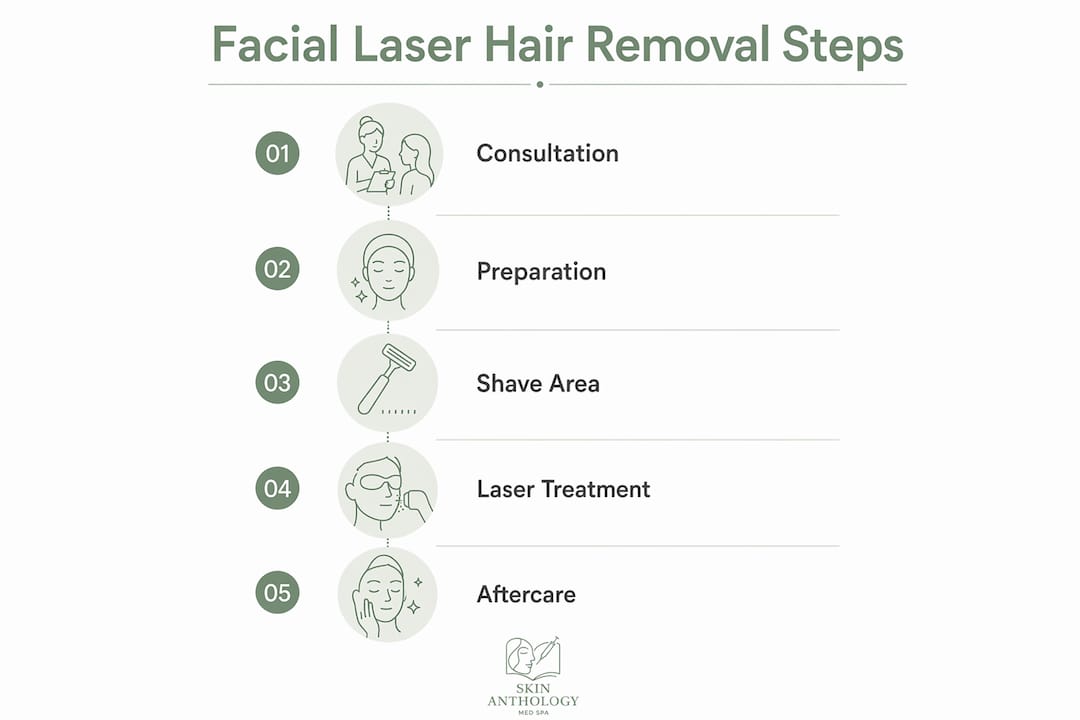
Preparation requires avoiding tanning for at least 2 weeks, and waxing, plucking and threading for 3 to 4 weeks, before each session. Tanning changes the melanin levels in your skin, which can cause the laser to misread your skin tone and increase the risk of burns or pigmentation changes.
A clinical consultation lasting 30–60 minutes is the foundation of a safe treatment plan. During this appointment, a provider reviews your medical history, assesses your skin type and hair color, and selects the appropriate laser system. Skipping this step and going straight to treatment is a red flag at any clinic.
- Avoid sun exposure and tanning for at least 2 weeks before treatment
- Stop waxing, plucking, and threading 3–4 weeks prior (shaving is fine and recommended)
- Shave the area 12–24 hours before your session
- Disclose all medications, especially photosensitizing drugs like certain antibiotics or retinoids
- Apply broad-spectrum SPF 30 or higher daily after each session to protect treated skin
- Avoid active skin infections, open wounds, or inflammatory conditions in the treatment area
Cooling technology built into modern laser devices reduces discomfort during treatment and protects the surrounding skin. This is not a luxury feature. It is a safety mechanism that limits heat spread beyond the follicle.
Pro Tip: If you are on any prescription skincare, including tretinoin or hydroquinone, pause use for at least one week before your session. These ingredients increase photosensitivity and can amplify side effects on the face.
Which laser technologies work best for facial hair removal?
The laser type matters as much as the number of sessions. Using the wrong wavelength on the wrong skin tone can cause burns, hyperpigmentation, or hypopigmentation. This is where clinical expertise separates good outcomes from bad ones.
Alexandrite lasers suit lighter skin tones with dark hair. Nd:YAG lasers are the preferred choice for darker skin types because the longer wavelength bypasses surface melanin and targets the follicle more safely. Diode lasers offer flexibility across a broader range of skin tones, making them a common choice in full-service clinics.
| Laser type | Best skin tones | Key advantage |
|---|---|---|
| Alexandrite | Fair to medium (Fitzpatrick I–III) | Fast treatment, high efficacy on dark hair |
| Nd:YAG | Medium to dark (Fitzpatrick IV–VI) | Safer for melanin-rich skin |
| Diode | Fair to dark (Fitzpatrick I–V) | Versatile, works across multiple skin types |
One limitation applies across all laser types: light or non-pigmented hair does not respond to laser treatment. Blond, gray, red, and white hairs lack the melanin the laser needs to absorb energy. For these hair colors, electrolysis remains the only clinically proven method of permanent removal.
- Fitzpatrick skin type classification guides laser selection at every reputable clinic
- Mixing laser types across sessions is sometimes used to address varied hair colors on the same face
- Providers should reassess your skin tone at each session, especially after sun exposure
What do facial laser hair removal treatments cost?
Cost is one of the most searched questions around facial laser hair removal, and the answer depends on several variables. Area size, session count, and whether you buy a package all affect your total investment.
At Skin Anthology, sessions for small facial areas such as the upper lip or chin are $99 per visit, the small area price on the price list. Full-face treatments cover more ground and cost more per session, but the per-area cost often works out lower than booking each zone separately.
Most people need about 6 to 8 sessions to complete a standard course. At $99 per session, eight upper lip sessions cost $792 paid one at a time, or $673.20 as a package of 8. Pre-paid bundles reduce the per-session rate and are worth asking about before you book your first appointment. Check treatment pricing before committing to a plan.
Hormonal facial hair along the chin and jawline often requires more sessions and periodic maintenance. People with PCOS may need more sessions and occasional top-up treatments to maintain results. Budget for this from the start rather than treating it as a surprise.
- Upper lip: typically 6–8 sessions
- Chin and jawline: often more sessions, especially with hormonal involvement
- Full face: about 6 to 8 sessions depending on hair density and skin type
- Maintenance sessions: 1–2 per year for hormone-affected areas
Pro Tip: Ask your provider whether package pricing locks in the per-session rate. Some clinics adjust pricing annually, so buying a bundle upfront protects you from rate increases mid-course.
Key Takeaways
Facial laser hair removal delivers long-term hair reduction when the right laser technology is matched to your skin type, sessions are spaced correctly, and preparation and aftercare protocols are followed consistently.
| Point | Details |
|---|---|
| Session count matters | Most people need about 6 to 8 sessions spaced 4 to 6 weeks apart for meaningful, lasting reduction. |
| Laser type must match skin tone | Alexandrite suits fair skin; Nd:YAG is safer for darker tones; diode covers a broad range. |
| Preparation reduces risk | Avoid tanning for at least 2 weeks and waxing for 3 to 4 weeks before each session; shave 12 to 24 hours prior. |
| Hormonal hair needs more sessions | Chin and jawline hair driven by hormones often requires more sessions and maintenance. |
| Non-pigmented hair does not respond | Blond, gray, and white facial hair requires electrolysis, not laser treatment. |
What I’ve learned from treating facial hair in Los Angeles
The most common mistake I see is people choosing a provider based on price alone. Facial laser hair removal is not a commodity service. The face has more variation in skin tone, hair type, and hormonal influence than almost any other treatment area. A provider who uses the same laser settings on every client is cutting corners, not costs.
The second thing I tell every person who comes to Skin Anthology for a consultation: expect gradual improvement, not a dramatic reveal after session one. The upper lip often responds quickly. The chin and jawline, especially with hormonal involvement, take longer and may need maintenance sessions even after the initial course is complete. That is not a failure. That is how the biology works.
Laser hair removal delivers long-term reduction, not guaranteed permanent removal. Anyone who promises otherwise is overstating what the science supports. What I can promise is that with the right technology, the right protocol, and consistent aftercare, most people achieve results that make daily grooming a non-issue.
Ask your provider three questions before you book: What laser system do you use and why is it right for my skin tone? What credentials does the person performing my treatment hold? What does your aftercare support look like between sessions? The answers tell you everything about whether a clinic is worth your time and money.
Facial laser hair removal at Skin Anthology in West Hollywood
Skin Anthology offers facial laser hair removal with treatment plans built around your skin type, hair color, and goals. Every client starts with a thorough consultation before a single laser pulse is applied.
The clinic’s West Hollywood location serves clients across Los Angeles with medical-grade laser systems and providers trained to match technology to the individual. Whether you are targeting the upper lip, full face, or hormone-affected areas along the chin and jawline, Skin Anthology builds a session plan that reflects your actual needs. Explore all treatment options or visit the Skin Anthology med spa to book your consultation and get a clear picture of what your treatment plan will look like.
FAQ
How many sessions does facial laser hair removal take?
Most people need about 6 to 8 sessions spaced 4 to 6 weeks apart. Hormonal areas like the chin may require more sessions and periodic maintenance.
Is laser hair removal on the face safe for dark skin?
Nd:YAG lasers are specifically designed for darker skin tones and are considered the safest option for Fitzpatrick skin types IV through VI. Proper laser selection by a trained provider is what makes the treatment safe.
Does facial laser hair removal hurt?
Most people describe the sensation as a quick snap or mild heat. Cooling technology built into modern devices significantly reduces discomfort during each session.
Can laser treatment remove all facial hair permanently?
Laser hair removal provides long-term reduction, not guaranteed permanent removal. Non-pigmented hairs (blond, gray, white) do not respond to laser and require electrolysis instead.
What should I do to prepare for a facial laser session?
Avoid tanning for at least 2 weeks, and waxing and plucking for 3 to 4 weeks, before your appointment, and shave the area 12 to 24 hours prior. A pre-treatment consultation ensures your provider selects the right laser and settings for your skin.