
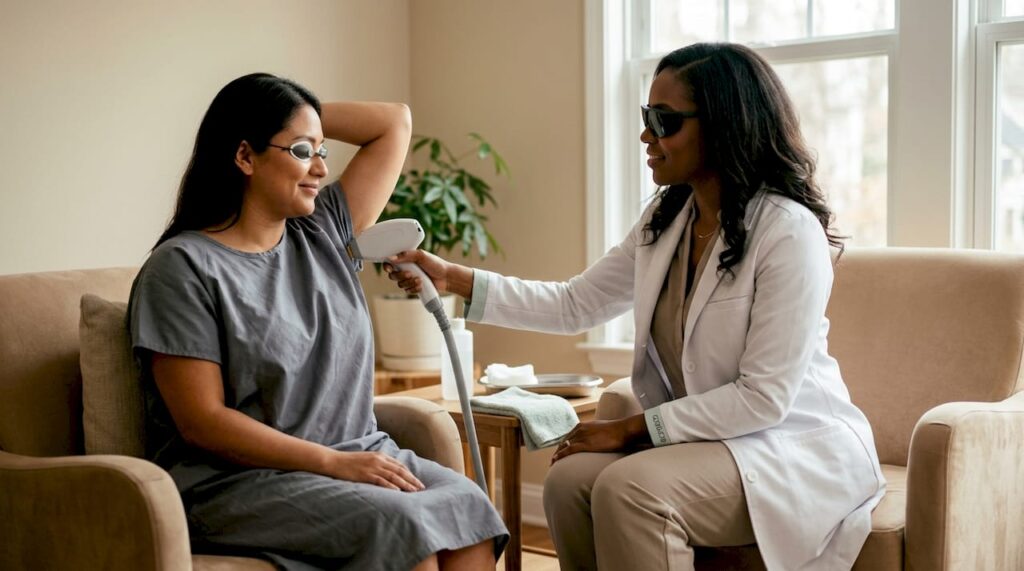
Laser hair removal for hidradenitis suppurativa is a clinically supported treatment that reduces flare-ups by destroying the hair follicles central to the disease’s inflammatory cycle. Hidradenitis suppurativa, commonly called HS, is a chronic skin condition causing painful lumps, abscesses, and scarring in areas like the armpits, groin, and under the breasts. According to a 2026 patient survey, 92% of adults with HS seek this treatment primarily to reduce inflammation, 75% to relieve pain, and 71% for durable, long-lasting results. Those numbers reflect how much patients need an option that goes beyond antibiotics and wound care. Skinanthology, based in West Hollywood and serving the Beverly Hills area, specializes in exactly this kind of targeted laser treatment for HS patients.
How does laser hair removal work for hidradenitis suppurativa?
Hair follicles sit at the center of HS pathogenesis. The follicle becomes blocked, ruptures, and triggers a cycle of deep inflammation that produces the painful nodules and tunnels characteristic of the condition. Laser hair removal breaks that cycle by using concentrated light energy to destroy the follicle at its root, removing the structural trigger before it can cause another flare.
The laser targets melanin inside the hair shaft and follicle. Heat travels down the shaft and damages the follicular bulb, preventing regrowth. Because the follicle is gone, the blockage and rupture sequence cannot repeat in that location.
Laser wavelength matters significantly for HS patients, and the choice depends on skin tone:
- 755-nm Alexandrite laser: The gold standard for lighter skin types, with strong melanin absorption and well-documented efficacy in randomized controlled trials.
- 1064-nm Nd:YAG laser: Preferred for darker skin phototypes because its longer wavelength bypasses surface melanin and reduces the risk of burns or pigmentation changes.
- Diode lasers (808–810 nm): A middle-ground option used across a range of skin tones, with solid safety data in HS clinical settings.
This is not cosmetic hair removal. The goal is not smooth skin for aesthetic reasons. The goal is to reduce the biological trigger that drives chronic inflammation. That distinction changes how sessions are planned, how parameters are set, and how outcomes are measured.
Pro Tip: Ask your provider which laser wavelength they use for your skin tone before booking. Using the wrong wavelength increases your risk of burns and reduces treatment effectiveness.
What can you expect from HS laser treatment sessions?
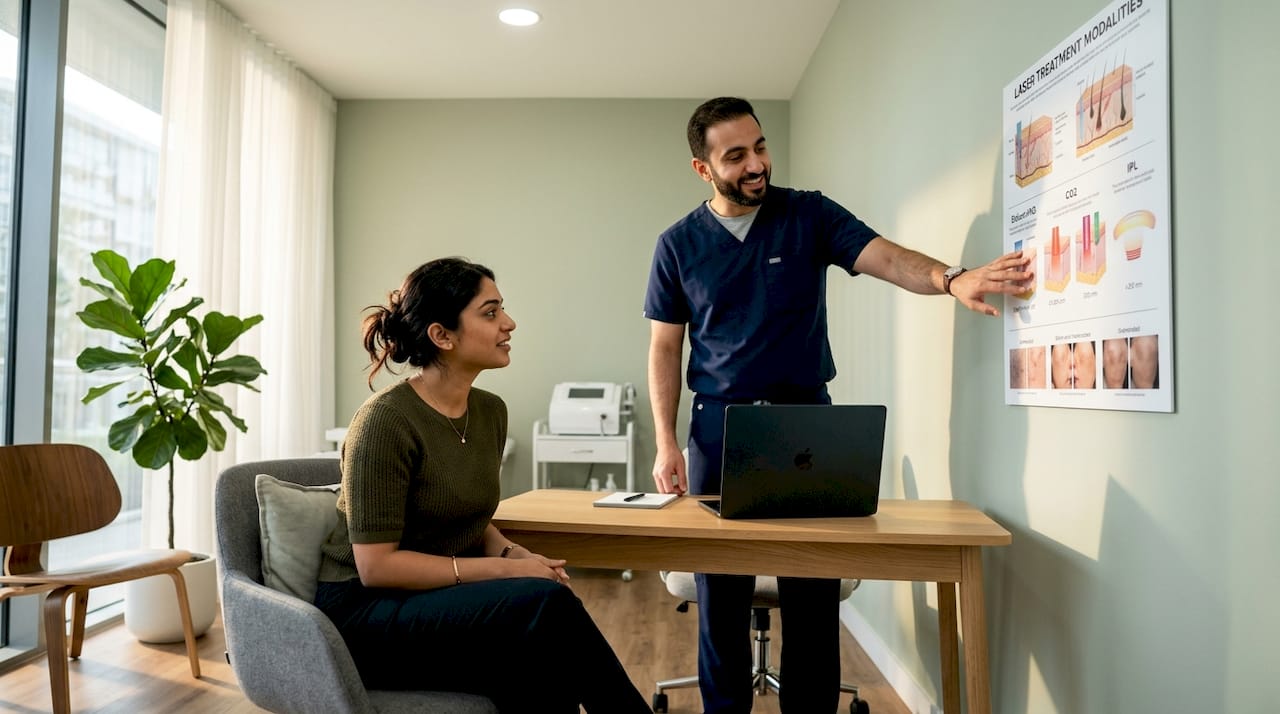
Patients with HS typically need a median of 8 sessions (with an interquartile range of 6–12) to see meaningful symptom improvement. That improvement includes reductions in lumps, abscesses, swelling, and flare frequency. Sessions are generally spaced about 6 weeks apart, and benefits often last over 12 months after completing a full course of treatment.
Here is a realistic picture of what the treatment timeline looks like:
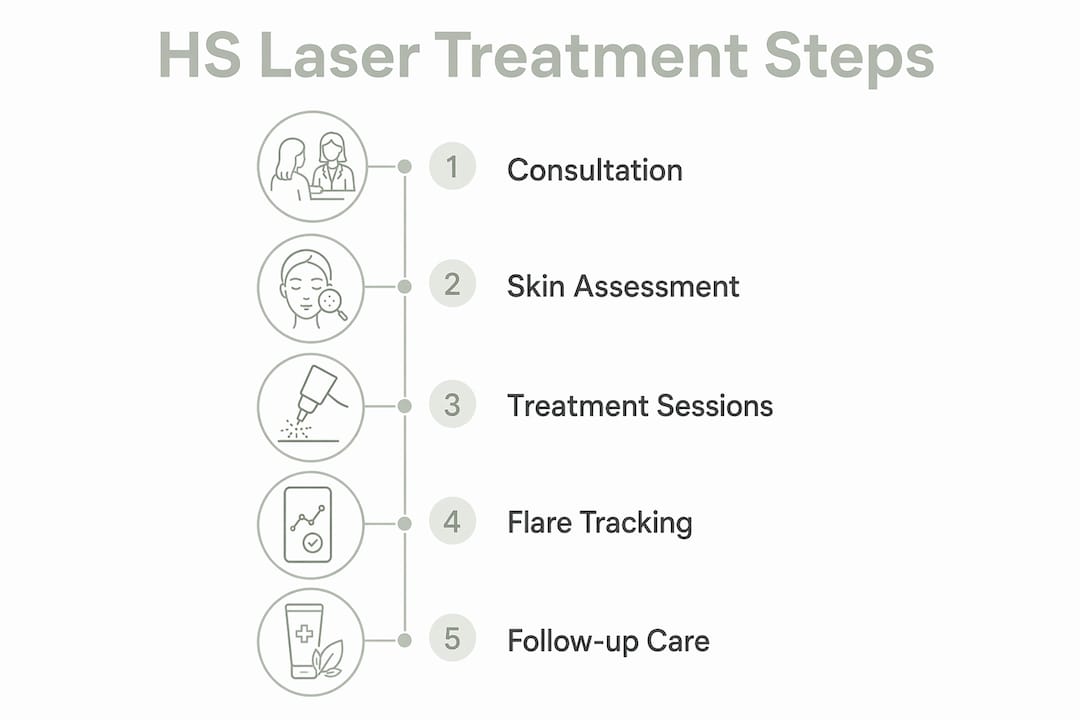
- Initial consultation: Your provider assesses your Hurley stage (the clinical severity scale for HS), maps active lesions, and selects laser parameters appropriate for your skin tone and current disease activity.
- Early sessions (1–3): Most patients notice reduced redness and less frequent new lesions. Discomfort during treatment is common, particularly in sensitive areas like the groin or axillae.
- Mid-course (4–6): Abscess frequency typically begins to drop. Swelling in affected areas often decreases noticeably.
- Later sessions (7–8+): Flare frequency continues to decline. Some patients reach a plateau and require maintenance sessions every few months to sustain results.
- Post-treatment maintenance: Results are durable but not permanent. Ongoing sessions and continued medical therapy keep flares suppressed.
Laser hair removal results are not curative. Patients who see the best outcomes treat it as one part of a broader HS management plan, not a standalone fix. Combining laser sessions with topical or systemic therapies produces more consistent, lasting relief than laser alone.
Treatment discontinuation is a real problem. A significant share of patients stop before completing the recommended course, often due to cost or discomfort. Managing expectations upfront about the number of sessions required and the gradual nature of improvement reduces frustration and dropout rates.
Pro Tip: Track your flare frequency in a simple journal before starting treatment. Comparing pre- and post-treatment flare counts gives you concrete evidence of progress and keeps motivation high during a long course.
Safety considerations for laser treatment in HS patients
Laser hair removal carries a strong safety profile when performed by a trained provider who understands HS. The most common side effects are mild and temporary.
Common side effects include:
- Redness and swelling at the treatment site, typically resolving within 24–48 hours
- Temporary discomfort or a stinging sensation during the session
- Minor skin darkening or lightening, particularly in patients with darker skin tones if the wrong wavelength is used
The most clinically significant risk specific to HS patients is paradoxical hypertrichosis. This is a condition where laser treatment actually stimulates hair growth instead of destroying it. Paradoxical hypertrichosis occurs in up to 18.3% of high-risk HS populations during laser treatments. That is not a small number. It means your provider must monitor for this actively and adjust laser settings if new hair growth appears in treated areas. Left unaddressed, paradoxical hypertrichosis increases disease burden rather than reducing it.
The other critical safety rule: never treat directly over an active, inflamed lesion. Treating inflamed lesions directly can worsen symptoms and damage already-compromised tissue. Skilled providers work around active flares, treating the surrounding follicular tissue and returning to previously inflamed areas once they have calmed down.
Pro Tip: If you have an active flare on the day of your appointment, tell your provider before the session begins. Treating around the flare rather than canceling the session entirely keeps your treatment on schedule without risking a worsening.
Cost, insurance, and access barriers for HS laser treatment
Cost is the most significant barrier to completing a full course of hidradenitis laser hair removal. The average session costs approximately $582, and most patients need 8 or more sessions. That adds up quickly.
| Cost factor | Detail |
|---|---|
| Average cost per session | Approximately $582 |
| Patients spending over $1,000 total | 63% of survey respondents |
| Patients who discontinued early | 38% stopped before completing treatment |
| Annual cost of conventional HS management | $16,000–$18,000 for biologics and systemic drugs |
| Insurance coverage status | Typically classified as cosmetic; rarely covered |
The comparison to conventional HS management costs is striking. Biologics and systemic drugs used for moderate-to-severe HS can cost $16,000–$18,000 annually. A full laser course, even without insurance, is a fraction of that. Experts now advocate for insurance coverage of laser hair removal as a medical necessity rather than a cosmetic procedure. Reclassifying it could reduce dependence on expensive biologics and systemic drugs, improving patient quality of life at a lower system-wide cost.
For Beverly Hills patients, reviewing treatment pricing before your consultation helps you plan financially and ask the right questions about package options. Some clinics offer bundled session pricing that reduces the per-session cost for patients committing to a full course.
Key Takeaways
Laser hair removal is the most evidence-backed non-surgical option for reducing HS flare frequency, requiring a median of 8 sessions as part of a multimodal treatment plan.
| Point | Details |
|---|---|
| Follicle destruction breaks the HS cycle | Laser targets the hair follicle to remove the primary trigger of HS inflammation. |
| Wavelength must match skin tone | Alexandrite lasers suit lighter skin; Nd:YAG lasers are safer and more effective for darker phototypes. |
| Expect 8+ sessions for results | A median of 8 sessions spaced 6 weeks apart produces durable symptom improvement lasting over 12 months. |
| Cost is a real barrier | At roughly $582 per session, 38% of patients discontinue early; bundled pricing and insurance advocacy may help. |
| Laser works best alongside other therapies | Combining laser with topical or systemic HS treatments produces better outcomes than laser alone. |
What I’ve learned about laser treatment and HS management
After working with HS patients at Skinanthology, the pattern I see most often is this: patients arrive having tried antibiotics, topical treatments, and lifestyle changes, and they are exhausted. They want laser hair removal to be the answer. My honest view is that it can be a major part of the answer, but only when it is treated as one tool in a broader plan.
The patients who see the best results are the ones who come in with realistic expectations and stay consistent. Eight sessions sounds like a lot when you are in pain and frustrated. But the data backs it up, and the patients who complete the course consistently report meaningful reductions in flare frequency and pain. The ones who stop at session four because they haven’t seen dramatic results yet are the ones who call back six months later wishing they had continued.
The other thing I tell every patient: the provider matters as much as the technology. HS is not a standard hair removal case. The laser parameters, the decision to treat around versus over a lesion, and the monitoring for paradoxical hypertrichosis all require clinical judgment. A provider who treats HS patients regularly will catch problems early and adjust. One who doesn’t may miss them entirely.
Choose a clinic that has direct experience with HS, not just general laser hair removal. Ask how they handle active flares during sessions. Ask what they do if they notice paradoxical hair growth. The answers will tell you everything you need to know about their level of expertise.
— Skin Anthology
Skinanthology’s approach to laser care for HS patients
Patients with hidradenitis suppurativa deserve a provider who understands the condition, not just the laser.

Skinanthology, located in West Hollywood and serving Beverly Hills, offers specialized laser hair removal designed for patients with complex skin conditions including HS. Every treatment plan is built around your skin tone, Hurley stage, and current disease activity. The team adjusts laser parameters session by session based on how your skin responds, monitors for paradoxical hypertrichosis, and coordinates care around active flares rather than canceling appointments. For patients managing HS alongside other skin concerns, Skinanthology also offers laser pigmentation correction to address post-inflammatory discoloration from past flares. Contact Skinanthology to schedule a consultation and get a personalized assessment of your treatment options.
FAQ
Does laser hair removal help hidradenitis suppurativa?
Yes. Laser hair removal reduces HS flare frequency by destroying hair follicles, which are the primary structural trigger of the inflammatory cycle. A 2026 patient survey found that the majority of HS patients report meaningful reductions in lumps, abscesses, and swelling after completing a full course of treatment.
How many laser sessions does HS treatment require?
Most patients need a median of 8 sessions, with sessions spaced approximately 6 weeks apart. Some patients require up to 12 sessions depending on disease severity and the areas being treated.
Can laser hair removal cure hidradenitis suppurativa?
Laser hair removal is not a cure for HS. It reduces flare frequency and severity but works best as part of a multimodal plan that includes topical or systemic medical therapies alongside laser sessions.
What laser is best for HS on darker skin tones?
The 1064-nm Nd:YAG laser is the preferred option for darker skin phototypes because its longer wavelength reduces the risk of surface burns and pigmentation changes while still effectively targeting the hair follicle.
Is laser hair removal for HS covered by insurance?
Most insurers currently classify the treatment as cosmetic and do not cover it. Experts advocate for reclassifying it as a medical necessity, which could change coverage policies and reduce patient out-of-pocket costs in the future.