
CO₂ Laser: Skin Resurfacing & Collagen Support
Skin Resurfacing & Collagen Support
CO₂ laser resurfacing is an advanced treatment used to improve sun damage, uneven texture and tone, fine lines, and acne scarring. The laser removes layers of damaged skin while stimulating collagen production, leading to measurable improvements in texture, tone, and firmness. Treatment is customized based on your skin’s needs and recovery preferences. Some patients benefit from a single session, while others choose a more gradual approach. Downtime is expected and varies with treatment depth, typically around 10–14 days. The goal is sustained improvement in skin quality, supporting resilience and a naturally brighter, healthier appearance.
How CO₂ Laser Resurfacing Works
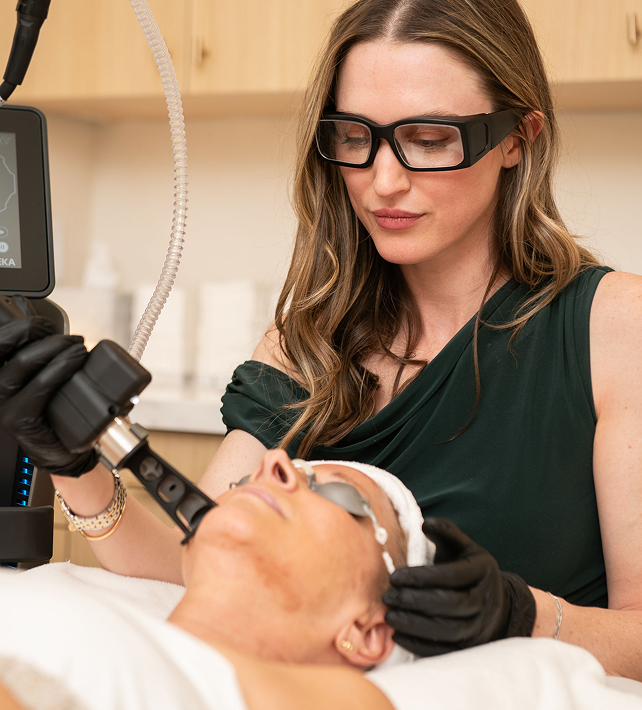
CO₂ laser resurfacing uses fractional laser energy to create controlled micro-injuries within the skin. This process removes damaged surface layers while activating the body’s natural repair response in deeper tissue. As the skin heals, collagen production increases and cellular turnover accelerates. Over time, this leads to smoother texture, improved tone, and firmer-looking skin. The fractional design allows surrounding tissue to remain intact, supporting more predictable healing while still delivering meaningful resurfacing.
Why We Love CO₂ Laser
Addresses multiple concerns in one treatment
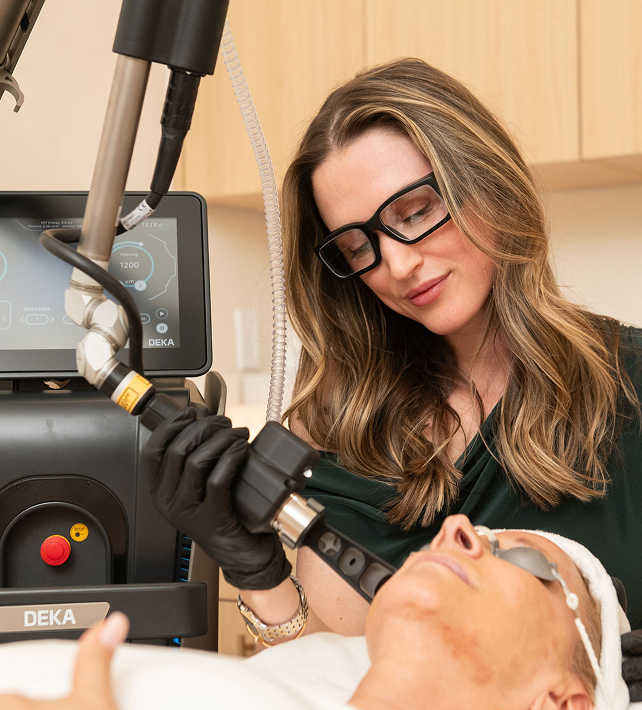
CO₂ laser resurfacing improves texture, tone, fine lines, sun damage, and acne scarring at the same time. Rather than targeting a single issue, it supports overall skin renewal in a comprehensive, efficient way.
Stimulates meaningful collagen renewal
By working in the deeper layers of the skin, CO₂ laser resurfacing encourages new collagen formation. This leads to firmer, smoother skin that continues to evolve as healing progresses.
Delivers visible change, not just maintenance
For patients seeking noticeable improvement — not subtle upkeep — CO₂ laser resurfacing offers a level of correction that lighter treatments cannot achieve. Many see significant results after one session.
Precision allows personalization
Treatment depth and coverage are adjustable, making it possible to tailor resurfacing to different skin concerns, tolerance levels, and recovery preferences. This flexibility allows results to be both effective and thoughtful.
Supports long-term skin health
Beyond surface refinement, CO₂ laser resurfacing strengthens the skin’s structure over time. The goal isn’t just smoother skin, but healthier, more resilient skin that reflects vitality rather than treatment.
Treatment Expectations and Care
Sun exposure
Avoid tanning, sunburn, and prolonged sun exposure for at least 2-4 weeks before treatment. Recently sun-exposed skin may not be eligible for CO₂ laser resurfacing.
Skincare adjustments
Retinoids, exfoliating acids, and other active products should be discontinued 7–14 days prior, depending on skin sensitivity. Do not stop prescription medication without consulting the prescribing provider.
Medication review
Please let us know about all medications and supplements you’re currently taking, including recent isotretinoin use. Certain medications can affect skin healing or sensitivity, and timing may be adjusted for safety. Never stop prescription medications without guidance from your prescribing clinician.
Health history
Please disclose a history of delayed healing, abnormal scarring, pigment disorders, cold sores, recent isotretinoin use, pregnancy or breastfeeding, or prior laser procedures.
Downtime planning
CO₂ laser resurfacing requires intentional recovery time. Most patients plan to take time away from work, social events, and sun exposure during the initial healing phase.
Visit length
Appointments typically last 45–90 minutes, depending on the targeted area.
Comfort measures
Comfort is supported with a topical numbing and continuous cryotherapy delivered through a Zimmer chiller to improve tolerance during treatment.
Laser delivery
Fractional CO₂ energy is applied in a controlled pattern to resurface the skin while stimulating collagen renewal beneath the surface.
Immediate recovery (Days 1–3)
Redness, swelling, warmth,are expected. Skin may feel tight or sensitive.
Visible healing phase (Days 4–10)
Peeling, flaking, and crusting occur as new skin forms. Pinkness is common.
Early recovery (Weeks 2–4)
Skin continues to strengthen; redness gradually fades. Makeup may be reintroduced once cleared by your provider.
Ongoing skin renewal (Months 1–6)
Collagen remodeling continues beneath the surface, supporting smoother texture, improved tone, and firmer-looking skin over time.
Sun protection
Strict sun avoidance and daily broad-spectrum SPF are essential for several months following treatment.
Activity limits
Avoid heat exposure, strenuous exercise, alcohol, and friction to the skin during early healing to reduce swelling and irritation.
Follow-up care
Post-treatment visits are recommended to assess healing and guide long-term skin care or future treatments.
Pricing
CO₂ laser resurfacing is priced based on the area being treated and your individualized treatment plan. During your consultation, we’ll review your goals and recommend an approach designed to support healthy, radiant skin. Package options are available for patients planning a series of treatments.
Frequently Asked Questions
How effective is CO₂ laser resurfacing?
CO₂ laser resurfacing is widely used to improve skin texture, fine lines, sun damage, and acne scarring by stimulating collagen and skin renewal. Individual results vary based on skin type, treatment settings, and healing response. Your provider will review what level of improvement is realistic for your skin.
What is the expected downtime after CO₂ laser resurfacing?
Most patients should plan for approximately 7–14 days of visible recovery, which may include redness, swelling, and surface skin shedding. Recovery timelines vary, and residual redness can persist longer in some individuals.
Will my skin look different during healing?
Yes. Temporary redness, sensitivity, and surface changes are part of the normal healing process. These changes gradually improve as new skin forms and collagen remodeling continues.
Is CO₂ laser resurfacing uncomfortable?
A topical anesthetic is applied before treatment, and cool air cryotherapy (Zimmer chiller) is used throughout to improve comfort. Sensation varies by individual and treatment intensity, but most patients tolerate the procedure well.
How long do CO₂ laser results last?
CO₂ laser resurfacing stimulates collagen production, which can support long-term improvements in skin quality. Results are not permanent and do not stop the natural aging process. Longevity depends on skincare, sun protection, lifestyle factors, and individual biology.